
Comparison
DIY Epoxy Garage Floor Kit vs a Professional Coating
Updated October 2026 · Garage Force of the Inland Northwest, Spokane Valley, WA
Quick answer
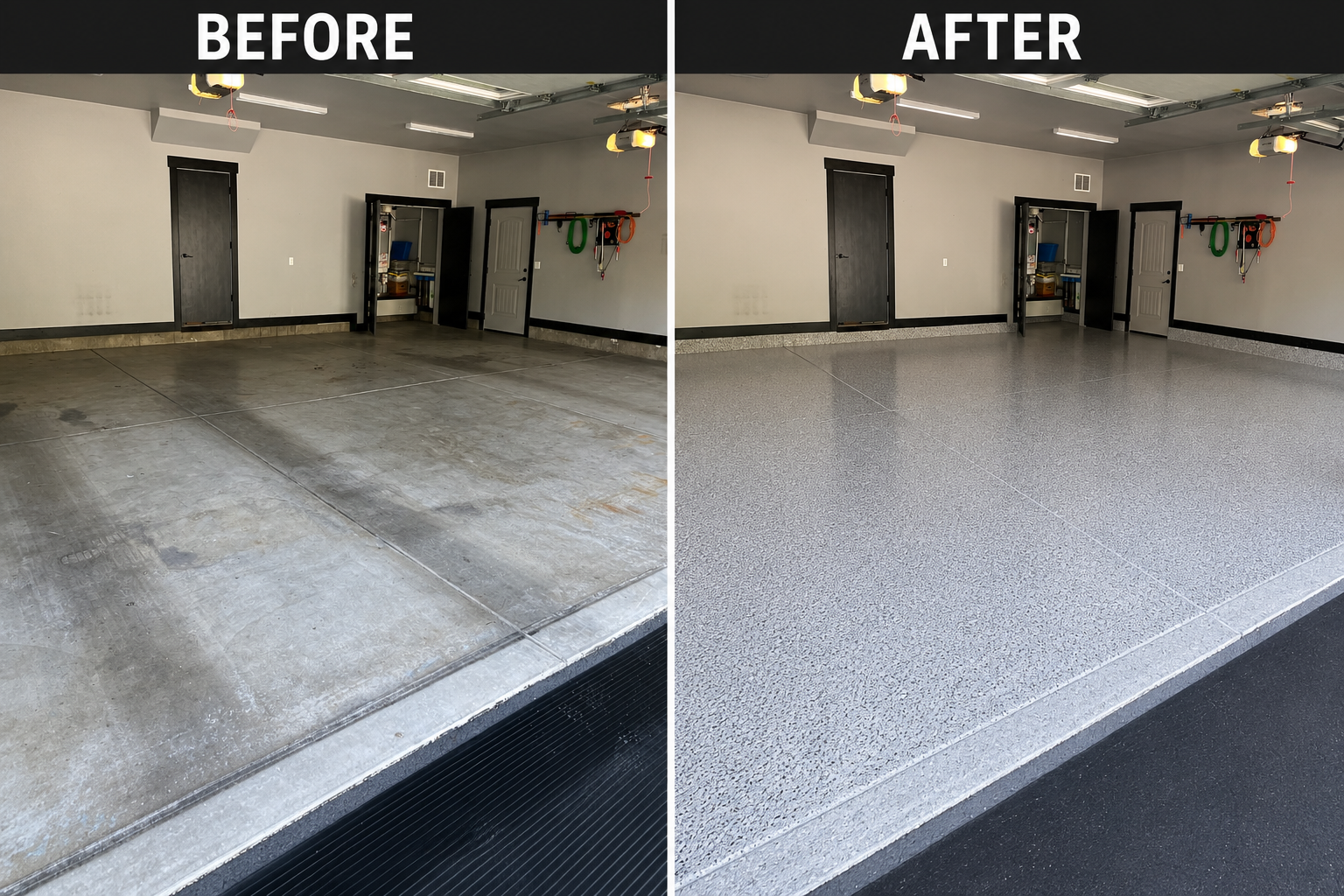
A DIY epoxy kit costs far less up front, but in the Inland Northwest many start peeling or lifting within the first few winters. Most kits are thin, and they go onto concrete that was only degreased or acid etched, so hot tires pull the coating up in summer and road brine and freeze thaw lift it in winter. A professional floor starts with mechanical prep and repair, then a polyurea chip system, and a failed kit has to be removed before anything new goes down.
- Veteran owned and local
- Licensed and bonded in WA and ID
- Transferable lifetime warranty
What a kit floor looks like after one winter
- Peeled patches in the tire tracks, where hot tires lifted the coating.
- Lifting and white haze near the door, where brine and meltwater pool.
- Bare concrete showing through worn spots, often already flaking underneath.
- Loose flakes of the kit coating itself coming up with the snow when you sweep.
Why kits fail here
Prep. Kits rely on a degreaser and an acid etch. That cleans the surface but does not remove builder curing compound or old sealer, and it leaves a weak top layer for the coating to grab. Mechanical prep opens up the concrete so the coating bonds into it.
Thickness. Most kits put down a thin coat. Thin coats wear through in the tire tracks and soften under hot tires, which then pull the coating up as they cool. This is called hot tire pickup, and it is one of the most common kit failures.
Weather. Epoxy needs a warm, dry slab to cure, and a weekend project often goes down whenever the weekend is free. Then an Inland Northwest winter of brine and freeze thaw finds every weak spot. See why garage floors flake from de-icer.
Side by side
| DIY epoxy kit | Garage Force polyurea chip floor | |
|---|---|---|
| Prep | Degrease and acid etch | Mechanically prepped slab |
| Repairs | Usually skipped | Cracks, pits and flaking repaired first |
| Coating | Thin epoxy, often one coat | Polyurea base coat, full broadcast chip, clear topcoat |
| Your time | A weekend or more, plus cure time | One day on most garages, done by the crew |
| Warranty | Varies by kit, and rarely covers your labor | Transferable lifetime warranty |
| Up front cost | Much lower | Higher |
If you already have a kit floor
A failing kit floor cannot be coated over. A new coating is only as strong as what is under it, so the old kit comes off during mechanical prep and the new floor goes onto bare concrete. Mention it when you book, and the owners will look at it at the estimate.
When DIY makes sense
If you park on it through the winter and plan to stay, compare the real cost in the cost guide.
- A garage or shed you never park in.
- A short term fix on a house you are selling soon, where you accept redoing it.
- A floor where you are fine with touch ups every year or two.
Get your exact price
Answer three quick questions, pick a time, and get a free on-site estimate. Free and on site with the owners.
Frequently asked questions
Why is my DIY epoxy peeling where I park?
Usually hot tire pickup on a thin coat with a weak bond. Hot tires soften the coating and grip it, then pull it up as they cool. Brine and meltwater speed it up in winter.
Can you coat over my DIY epoxy floor?
No. It is removed during prep so the new floor bonds to bare concrete instead of to a coating that is already letting go.
Is acid etching enough prep for a garage floor?
Not for a coating that has to survive tires, brine and freeze thaw. Mechanical prep removes sealers and curing compounds and opens up the concrete so the coating bonds into it.
Is a professional floor worth it?
If you park on it every winter and plan to stay, usually yes. You pay once instead of redoing a kit, and Garage Force floors carry a transferable lifetime warranty that goes with the house if you sell.