
Flaking and spalling
Why Is My Garage Floor Flaking? De-Icer, Mag Chloride and the Fix
Updated October 2026 · Garage Force of the Inland Northwest, Spokane Valley, WA
Quick answer
In Spokane and North Idaho, a garage floor that is flaking, pitting or spalling is usually being damaged by winter road brine and freeze thaw. Cars carry magnesium chloride and salt brine off the roads, it drips onto the slab as the snow melts, soaks into the concrete and weakens the surface, and freeze thaw cycles pop the top layer off. The fix is to repair the damaged concrete and cover it with a coating that keeps brine on the surface, where it can be wiped up.
- Veteran owned and local
- Licensed and bonded in WA and ID
- Transferable lifetime warranty
What you are looking at
- Scaling: thin flakes of the top surface coming off, often in patches under where the cars park.
- Pitting: small holes or popouts scattered across the slab.
- Spalling: larger, deeper pieces breaking away, often near the door or along edges.
- White crust or residue: salt and minerals left behind as brine dries.
Why winter brine is so hard on concrete
Washington and Idaho road crews treat roads with liquid de-icers, including magnesium chloride and salt brine. Research on de-icers has found that magnesium chloride in particular reacts with the cement paste over time and weakens it, on top of the usual damage from water freezing inside the concrete.
Your garage gets a dose every time you drive in. The snow packed in the wheel wells melts, the brine runs onto the slab, and with nowhere to go it soaks in. Then the garage door opens and closes through freezing nights and sunny afternoons, and the water in the top layer of concrete freezes, expands and pops it loose. Homeowners often blame old concrete. It is usually the brine.
How it gets fixed
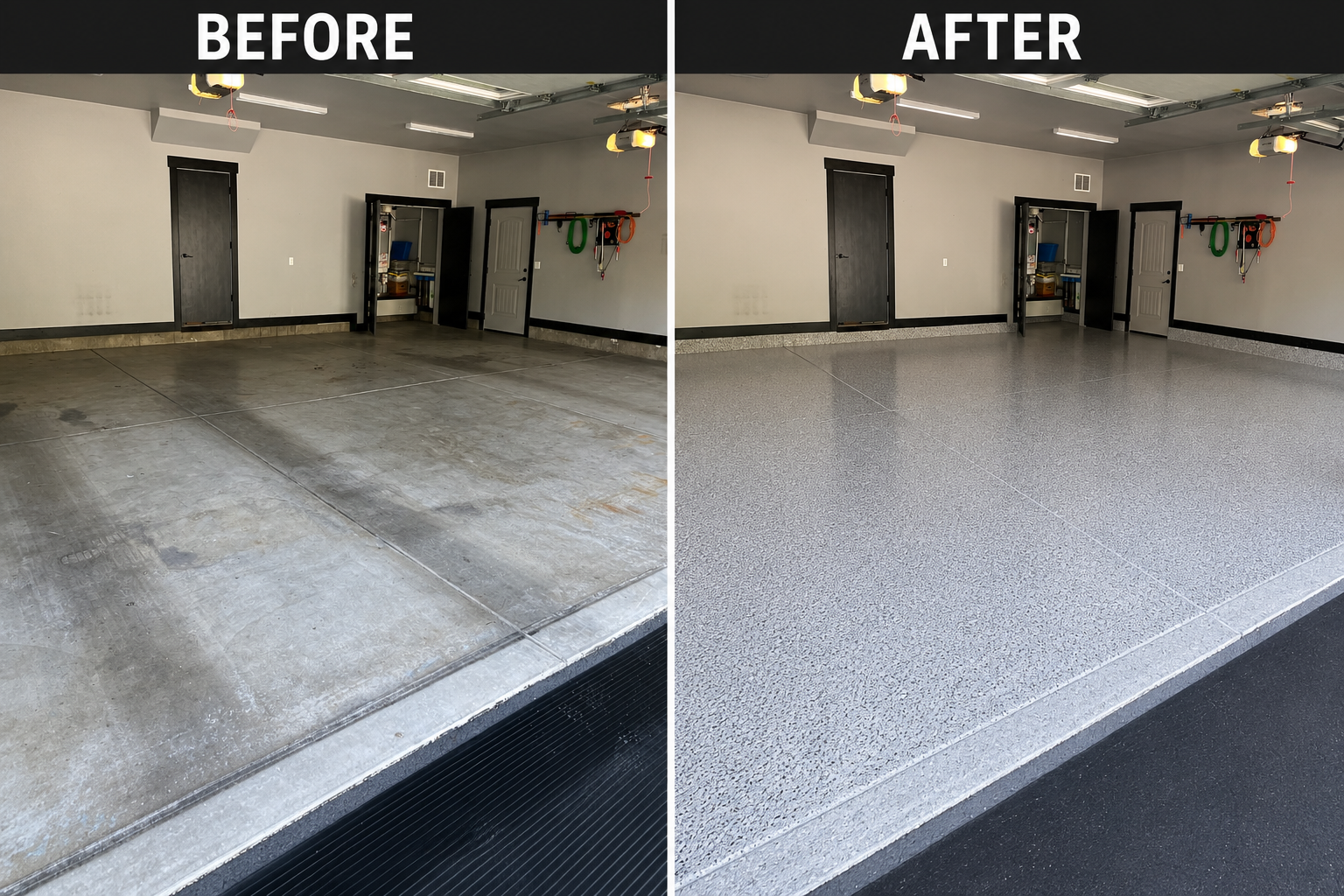
After that, winter brine lands on the coating instead of the concrete. Squeegee meltwater out the door when it pools and it stays off the concrete. See garage floor coating in Spokane for the full install, or Post Falls and Coeur d'Alene on the Idaho side.
- 1Mechanically prep the slab down to sound concrete, removing loose and flaking material.
- 2Fill and repair pits, spalled areas and cracks so the surface is level.
- 3Apply the polyurea base coat and a full broadcast of color chip.
- 4Finish with a clear topcoat that keeps brine and oil on the surface.
Slowing it down until then
- Knock packed snow off the wheel wells outside when you can.
- Squeegee meltwater out of the garage instead of letting it sit.
- Rinse the floor with plain water during a thaw to flush brine out.
- A sealer can slow it for a while. Compare the options in coating vs sealer.
Get your exact price
Answer three quick questions, pick a time, and get a free on-site estimate. Free and on site with the owners.
Frequently asked questions
Is my garage floor flaking because the concrete is old?
Age plays a part, but in Spokane and North Idaho the usual cause is years of road brine and freeze thaw. Newer slabs flake too if they are left bare.
Can a badly flaked floor still be coated?
In most cases, yes. Surface flaking and pitting are repaired during prep. If a slab has heaved, sunk or has wide structural cracks, the owners will tell you whether coating is the right fix.
Will a coating stop the damage?
It keeps brine from soaking into the slab, which is what causes the damage. The concrete under a sound coating is protected from the next winters of de-icer.
When is the best time to fix it?
Get the estimate in winter while the damage is easy to see, and book the repair and coating for spring. See when to book.